


Introduction
As a crucial link connecting vocational education classrooms with job positions, the dual-mentor system between schools and enterprises serves as a core mechanism for achieving deep integration between industry and education and enhancing the quality of talent cultivation in vocational education. Its establishment and refinement are not only an inevitable requirement for implementing high-quality development in vocational education but also a vital measure to address the structural shortage of industrial talent and promote collaborative development between industry and education, holding significant practical importance. The newly revised Vocational Education Law of the People's Republic of China in 2022 explicitly calls for "deepening the integration of industry and education, as well as school-enterprise cooperation, and implementing the dual-mentor system between schools and enterprises," designating this system as one of the core practical pathways for the typological development of vocational education. Subsequently, multiple departments including the Ministry of Education have successively issued a series of high-profile policy documents, such as the Opinions on Deepening the Reform of the Construction of a Modern Vocational Education System in 2023, the Several Opinions on Further Promoting Industry-Education Integration and School-Enterprise Cooperation in Vocational Education in 2024, and the Professional Action Plan for the Development of Vocational Education Teachers (2025-2028) in 2025. These documents all emphasize the need to improve the selection, training, and evaluation mechanisms for dual mentors from schools and enterprises, strengthen the collaborative efforts of dual mentors in practical teaching, and promote the co-cultivation of talent and resource sharing between schools and enterprises, thereby providing clear policy guidance for the implementation of the dual-mentor system between schools and enterprises.
However, while the exploration of the dual-mentor system between schools and enterprises in the current vocational education sector has achieved certain progress, there remains a significant gap compared to policy requirements and industrial demands, primarily manifesting in the following three prominent issues. Firstly, there exists a misalignment in the talent cultivation objectives between schools and enterprises. Schools primarily emphasize the cultivation of theoretical knowledge and professional qualities, whereas enterprises focus on job-specific skills and practical adaptability. Consequently, there is a lack of unified and cohesive guidance from the dual mentors in the dual-mentor system between schools and enterprises. Secondly, the delineation of mentors' rights and responsibilities remains ambiguous, leading to a situation where school mentors often work in isolation while enterprise mentors' involvement tends to be formalistic, resulting in a fractured collaborative educational chain within the dual-mentor system between schools and enterprises. Thirdly, there exists a bidirectional disconnection of resources between schools and enterprises. The teaching resources of schools and the practical resources of enterprises have not been effectively integrated, leaving the dual-mentor system between schools and enterprises lacking a normalized resource-sharing and support framework. These issues have caused the dual-mentor system between schools and enterprises to become mere formalities, failing to fully unleash its potential for collaborative talent cultivation. Consequently, they have emerged as significant bottlenecks restricting the deepening of industry-education integration in vocational education.
Currently, academic research on the dual-mentor system between schools and enterprises predominantly focuses on higher vocational education or short-term school-enterprise cooperation projects, with relatively scarce studies targeting secondary vocational education. Moreover, there is a notable lack of in-depth analysis regarding the construction process and collaborative mechanisms of the dual-mentor system within the context of long-term, stable school-enterprise cooperation scenarios. Meanwhile, as the foundational level of vocational education, secondary vocational education features distinct characteristics such as the fundamental nature of skill development, job-specific adaptability, and staged growth in student progression. However, existing research findings demonstrate insufficient adaptability to the dual-mentor system between schools and enterprises tailored for secondary vocational education. Based on this premise, this case study adopts the analytical framework of symbiosis theory and focuses on the White Swan Management Trainee Program, a collaborative initiative between Guangzhou Tourism and Business Vocational School and the White Swan Hotel in Guangzhou, as its research subject. The study aims to conduct a systematic analysis of the construction process of the dual-mentor system between schools and enterprises in secondary vocational education, distill the core mechanisms underlying its synergistic operation, and evaluate the educational effectiveness of this system. The ultimate goal is to provide empirical references for addressing the current collaborative challenges encountered by the dual-mentor system between schools and enterprises.
Literature Review
The Dual-Mentor System Between Schools and Enterprises
The dual-mentor system between schools and enterprises serves as a core practical vehicle for the integration of industry and education as well as collaborative school-enterprise talent cultivation in vocational education. By leveraging the complementary strengths of schools and enterprises and facilitating collaborative teaching, it helps achieve precise alignment between talent cultivation in vocational education and the demands of industrial positions, thus representing a pivotal approach for driving high-quality development of vocational education in the new era. At present, with the advancement of the typological development of vocational education, research on the dual-mentor system between schools and enterprises has become a focal point. Current studies primarily concentrate on three aspects: connotative characteristics, practical dilemmas, and implementation pathways. However, there remain certain gaps in terms of theoretical depth and systematization.
Regarding connotative characteristics, the academic community has reached a relatively consistent understanding of the fundamental attributes of the dual-mentor system between schools and enterprises. Li and Li summarized its core features as the hybrid nature of educational orientation, the dual nature of educational agents, and the shared nature of educational objectives, emphasizing the complementary relationship between on-campus mentors and enterprise mentors in talent cultivation (Li & Li, 2022). From the perspective of high-level apprenticeship, Li and Li proposed that the construction of the dual-mentor team under the dual-mentor system between schools and enterprises should aim for a high-caliber orientation to support the cultivation objectives of outstanding engineers and master craftsmen at the undergraduate level. This approach breaks through the previous limitations of focusing solely on skill inheritance, emphasizing the integration of academic and technical proficiencies within the mentor team (Li & Li, 2023). Ba further clarified the phased educational objectives and responsibility boundaries of the dual mentors under the dual-mentor system between schools and enterprises, proposing that this serves as a critical prerequisite for achieving collaborative school-enterprise talent cultivation (Ba, 2019).
In terms of the analysis of the practical dilemmas in collaborative talent cultivation under the dual-mentor system between schools and enterprises, the academic community identifies multiple barriers, with scholars adopting varying perspectives. Li and Li (2022) systematically summarized five major challenges: low participation from industry enterprises, the absence of well-defined selection and evaluation criteria, insufficient development of core professional competencies, difficulties in safeguarding the rights and interests of dual mentors, and inadequate collaborative mechanisms. Addressing the real-world challenges of cross-regional school-enterprise collaborations, Liu and Wu argued that the traditional dual-mentor system between schools and enterprises encounters significant obstacles, including weakened professional identity recognition and process coordination difficulties arising from spatial and temporal separations (Liu & Wu, 2021). Han and Zhang, focusing on the overall effectiveness of the modern apprenticeship pilot program, identified “insufficient motivation among mentors” as the key bottleneck constraining the quality of talent development (Han & Zhang, 2020). Additionally, Fu et al. observed the trend of student diversity resulting from the expansion of higher vocational education enrollment, thereby posing higher demands on the personalized guidance capabilities of the dual-mentor system (Fu et al., 2020).
Regarding the practical approaches to the dual-mentor system between schools and enterprises, the academic community has proposed a variety of solutions from different perspectives. Qi et al. have put forward a collaborative education model featuring dual mentors and dual platforms, emphasizing the establishment of a long-term mechanism for the integration of industry and education by relying on on-campus practice platforms and school-enterprise collaboration platforms (Qi et al., 2022). Liu and Wu (2021) innovatively proposed the "remote collaboration" framework, advocating for the realization of five types of collaboration—identity, process, content, tools, and evaluation—through internet technology. This framework provides theoretical support for the implementation of the dual-mentor system between schools and enterprises in geographically dispersed contexts. Zhang and Li emphasize the importance of establishing a mechanism for mutual hiring and shared utilization, as well as two-way job attachments, to cultivate a high-caliber team of dual mentors for the modern apprenticeship system under the framework of the dual-mentor system between schools and enterprises (Zhang & Li, 2018). Drawing on practical experience, Zhao et al. elaborated on strategies for building a dual-mentor team from three dimensions: the establishment of institutional frameworks, the formation of mentor teams, and the enhancement of mentors' professional competencies, within the context of the dual-mentor system between schools and enterprises (Zhao et al., 2019). Deng, featuring the "trinity" management model, proposed ensuring the implementation of the dual-mentor system between schools and enterprises through the establishment of a special fund and an evaluation-feedback system (Deng, 2013).
Although existing research has made some progress, several research gaps remain to be addressed. First, most studies remain at the level of empirical summaries and descriptive accounts, lacking systematic theoretical explanations of the operational mechanisms and underlying logic of the collaborative mechanisms within the dual-mentor system. Secondly, research on the adaptability of dual-mentor systems across different academic disciplines (such as engineering and liberal arts), educational levels (secondary vocational, higher vocational, and undergraduate), and student populations (regular students and adult learners) remains extremely scarce. Particularly lacking is research on school-enterprise dual-mentor systems within the secondary vocational education sector. Third, current research primarily focuses on the development and implementation of the dual-mentor system, with a lack of systematic empirical studies on its outcomes in talent cultivation, student career development tracking, and corporate benefit assessments following its implementation.
Symbiosis Theory
Connotation of Symbiosis Theory. The symbiosis theory was first proposed by the German biologist de Bary in 1879. Initially, it was used to elucidate the interdependent and interactive survival relationships among biological species. Later, it gradually extended to social science fields such as sociology, economics, and pedagogy, becoming an important theoretical tool for analyzing the relationships among entities within a system and revealing the laws of system evolution.
The classic symbiosis theory posits that a symbiotic system comprises four core elements: symbiotic units, symbiotic modes, symbiotic environments, and symbiotic interfaces. These four elements are interrelated, collectively determining the system's operational state and evolutionary trajectory. Among these, symbiotic units serve as the fundamental building blocks of symbiotic relationships, with their resource complementarity forming the basis for such relationships. Symbiotic modes represent the forms of interaction between units, categorized into parasitism, commensalism, and mutualism, with symmetrical mutualism being the ideal evolutionary direction. The symbiotic environment encompasses external conditions such as policy, market dynamics, and culture within which symbiotic relationships operate, and its suitability influences the sustainability of these relationships. The symbiotic interface serves as the medium for the exchange of matter, energy, and information between units, acting as the key enabler of synergy. In general, the core logic of symbiosis theory lies in emphasizing the interdependence and co-evolution of various units within a system. Through complementary advantages and resource sharing, it ultimately generates a "1+1>2" symbiotic energy, driving the system to dynamically evolve from a lower level to a higher one.
As this theory has evolved, scholars have expanded its application boundaries across various disciplines. For instance, in economics, symbiosis theory can be used to analyze the development patterns of industrial clusters; in management studies, it can be applied to research corporate collaboration and organizational governance; and in education, it can be utilized for topics such as educational governance and school-enterprise cooperation. These studies have enriched the scope and implications of symbiosis theory while deepening academic understanding of symbiotic relationships and developmental patterns among entities within systems across diverse fields.
Symbiosis Theory and Vocational Education. As a conceptual framework for analyzing symbiotic phenomena in the biological realm, symbiosis theory has been introduced into the field of vocational education research in recent years. It provides a distinctive theoretical lens for elucidating the underlying mechanisms of school-enterprise collaboration and the integration of industry and education. Through a comprehensive review of relevant literature, it has been observed that research in this field primarily focuses on three dimensions: the deconstruction of elements within symbiotic systems, the practical challenges encountered, and the pathways for implementation. Furthermore, there is a discernible trend of transitioning from mere pattern description to in-depth mechanism analysis.
In terms of deconstructing the elements of symbiotic systems, researchers commonly draw upon the core conceptual framework of symbiosis theory, treating school-enterprise cooperation in vocational education as a complex system involving multiple interacting entities. Zhou and Xiao (2023) pointed out that the symbiotic entity of industry-education integration in vocational education encompasses core symbiotic entities such as government departments, industry organizations, enterprises, and vocational colleges. The establishment of their symbiotic relationships relies on the safeguards provided by the legal system, institutional frameworks, and cultural environment. Zeng and Shi (2024) further deconstructed the symbiotic network of industry-education integration communities into four core elements: symbiotic units, symbiotic interfaces, symbiotic modes, and symbiotic environments, emphasizing the widespread existence of heterogeneous symbiosis within this system. From a dynamic perspective, Sun et al. defined the symbiotic driving force of school-enterprise cooperation in vocational education as the organic unity of the demand force of symbiotic units and the driving force of the symbiotic environment. Among them, the demand force of symbiotic units encompasses dimensions such as resource coupling, cultural integration, and educational responsibilities between industrial sectors and vocational education sectors (Sun & Xu, 2024). From the perspective of the holistic functioning of the symbiotic system, Gan and Huang (2025) analyzed the action mechanisms of symbiotic units, symbiotic modes, symbiotic environments, and symbiotic interfaces, providing an analytical framework for understanding the complexity of industry-education integration in the context of digital transformation.
In terms of diagnosing real-world dilemmas, scholarly research has unveiled multiple issues of imbalance confronting the symbiotic system of school-enterprise cooperation in vocational education. From the perspective of symbiotic units, structural contradictions in resource supply and demand, as well as inefficient cooperation models, exist among the main entities involved in school-enterprise collaboration (Song & Zhang, 2022). Xu focused on the issue of corporate responsibility deficiency, pointing out that enterprises participating in the modern apprenticeship system face a triad of dilemmas: weak awareness of primary responsibility, insufficient internal motivation, and shallow levels of integration (Xu, 2021). From the perspective of symbiotic dynamics, Sun and Xu (2024) identified systemic challenges such as imbalances in resource supply and demand among symbiotic units, discrepancies in cultural values, cognitive biases in cooperation, and insufficient support mechanisms. From the perspective of symbiotic modes, Zhou and Xiao (2023) pointed out that the current construction of industry-education integration symbiotic entities is still in its nascent stage, having not yet achieved the ideal models of integrated symbiosis and symmetrical reciprocal symbiosis. Inequalities in the status of key stakeholders persist, and a fully realized landscape of multi-stakeholder collaborative governance has yet to emerge. Gan and Huang (2025), starting from the specific context of digital transformation, proposed that the slow evolution and updating of symbiotic modes, along with imbalanced benefit distribution, constitute critical bottlenecks hindering the deepening of industry-education integration. From the perspectives of the symbiotic environment and symbiotic interface, Zeng and Shi (2024) emphasized that insufficient support from policy and cultural environments, along with inefficient energy transmission across the symbiotic interface, represent prominent challenges confronting the construction of industry-education integration communities. Gan and Huang (2025) further pointed out that the instability of the transmission mechanism at the symbiotic interface obstructs the flow of resources, thereby constraining the robust operation of the symbiotic system.
In exploring practical pathways, academia has proposed optimization strategies from various dimensions. For symbiotic units, Song and Zhang (2022) proposed establishing a “supply-demand matching” symbiotic driving mechanism; Xu (2021) advocated strengthening the symbiotic concept and enhancing corporate agency awareness; Sun and Xu (2024) emphasized promoting the generation of symbiotic unit momentum, deepening school-enterprise collaboration through coordinated internal and external driving forces. Regarding symbiotic modes, Zhou and Xiao (2023) advocate strengthening the integration of industry-education symbiosis and equitable sharing of benefits. Zeng and Shi (2024) propose refining symbiotic modes to advance substantive implementation. Sun and Xu (2024) emphasize enhancing mutual benefit symbiosis and building integrated models. Regarding symbiotic environments, Gan and Huang (2025) proposed optimizing the positive impacts of symbiotic environments to promote the robust development of symbiotic systems. Zeng and Shi (2024) emphasized strengthening policies and enhancing cultural-cognitive awareness to cultivate symbiotic environments. Song and Zhang (2022) called for achieving a “multiple synergistic” policy synergy. Regarding symbiotic interfaces, Gan and Huang(2025) advocate strengthening the transmission capacity of symbiotic interfaces to establish diversified channels for resource allocation. Zeng and Shi (2024) emphasize ensuring unimpeded energy transmission across symbiotic interfaces to enhance integration and connectivity. Zhao proposes at a higher level the construction of a school-enterprise community of shared destiny. Following the action path of “stimulating motivation—enhancing capabilities—boosting vitality,” this approach aims to achieve the organic integration of a school-enterprise community of shared interests, a community of shared governance, and a community of shared values (Zhao, 2021).
Although research on school-enterprise collaboration from the perspective of symbiosis theory has made certain progress, several research gaps still remain to be urgently addressed. Firstly, the research lacks depth, as the symbiosis theory is often employed merely as a simplistic analytical framework without being integrated with the distinctive characteristics of vocational education to construct a tailored analytical system. Secondly, the research tends to focus on macro-level aspects, concentrating on the macro-mechanisms and models of school-enterprise collaboration, while neglecting micro-level studies of specific practical forms. This has resulted in a failure to uncover the application pathways of the theory in concrete practices. Thirdly, there exists a research gap in the field, with the symbiosis theory being predominantly applied to higher vocational education and relatively little research conducted on secondary vocational education. Notably, there is a dearth of in-depth studies that combine the symbiosis theory with the core practical vehicle of dual-mentorship systems in secondary vocational school-enterprise collaboration. In summary, there remains substantial room for the expansion of symbiosis theory's application in the field of vocational education. It is urgently necessary to conduct in-depth case studies that integrate the characteristics of secondary vocational education with specific school-enterprise collaboration practices. Such efforts will not only enrich the theoretical application outcomes but also provide theoretical guidance for the implementation of the dual-mentorship system in vocational education school-enterprise collaboration.
Research Design
Research Methodology
This study employs a case study approach within a qualitative research paradigm, focusing on the White Swan Management Trainee Program—a collaborative initiative between Guangzhou Vocational School of Tourism and Business and Guangzhou White Swan Hotel—as its singular case. The case study method is suitable for conducting systematic analyses of complex phenomena within specific contexts. It excels particularly at addressing questions of “how to do” and “why it is so,” enabling in-depth characterizations of research subjects through cross-validation of evidence from multiple sources. This aligns highly with the research objective of this study, which investigates the construction process and collaborative mechanisms of the dual-mentor system between schools and enterprises in secondary vocational schools. Specifically, the operation of the dual-mentor system between schools and enterprises constitutes a complex practice embedded within specific collaborative scenarios. The formation of its coordination mechanisms is influenced by multiple factors—including policy, stakeholders, and resources—making it difficult to achieve systematic deconstruction through quantitative research. The case study approach transcends the limitations of linear research, faithfully reconstructing the practical context of the White Swan Management Trainee Program's dual-mentor system between schools and enterprises. It precisely captures the interactive logic among symbiotic units, patterns, environments, and interfaces.
Case Selection
The selection of the White Swan Management Trainee Program as the research subject in this case is the result of a comprehensive consideration of numerous factors. The White Swan Management Trainee Program is not a short-term pilot initiative, but rather a mature talent development model refined through continuous practice and iterative optimization across multiple phases—including evening classes, short-term training courses, and customized corporate programs. Having operated steadily for five consecutive cohorts, the accumulated experience and methodologies provide this study with authentic, rich, and representative empirical foundations, thereby avoiding the partiality and randomness often associated with research outcomes from short-term collaborative projects.
Meanwhile, as China's first Sino-foreign joint venture five-star hotel established after the country's reform and opening-up, the Guangzhou White Swan Hotel stands not only as a benchmark for the domestic high-end hotel industry and a representative of national hotel brands, but also plays a significant role in advancing vocational education. Its talent development standards and service management models have become industry benchmarks, while its collaboration with educational institutions in talent cultivation has yielded extensive experience and high-quality resources. The other partner institution, Guangzhou Tourism and Business Vocational School, holds the status of a nationally key vocational school and was among the first batch of national model schools for secondary vocational education reform and development. It enjoys a high reputation within the Greater Bay Area and across China's vocational education sector. The high caliber of both the school and enterprise partners has laid a solid foundation for implementing the dual-mentor system between schools and enterprises in the White Swan Management Trainee Program.
Additionally, core members of the research team served as class advisors for the White Swan Management Trainee Program, a role that provided inherent advantages for the smooth progression of the research. Team members have been deeply involved in the entire educational process of the specialized program, spanning from student recruitment, curriculum design, and daily teaching to corporate training and assessment evaluation. Through this firsthand engagement, they have closely observed and experienced the actual operational scenarios and educational outcomes of the dual-mentor system between schools and enterprises. Due to this insider status, the team was able to conveniently conduct in-depth interviews with key participants, including school administrators, core teachers of the White Swan Management Trainee Program, enterprise mentors, and students. This facilitated the efficient collection of core documentary materials such as talent cultivation plans, internship evaluation forms, and meeting minutes from school-enterprise collaboration. By cross-verifying primary and secondary data sources, the team ensured the authenticity, richness, and comprehensiveness of the research data, thereby providing robust data support for an in-depth analysis of the collaborative mechanisms within the dual-mentorship system between schools and enterprises.
Case Overview
Historical Background of the White Swan Management Trainee Program
The school-enterprise collaboration between Guangzhou Vocational School of Tourism and Business and Guangzhou White Swan Hotel can be traced back to the founding of the college in 1981. Over the past four decades and more, both parties have journeyed hand in hand, jointly witnessing the integrated development of China's hospitality industry and vocational education. At the outset of their collaboration, to urgently meet the White Swan Hotel's pressing demand for professional service personnel in preparation for its opening, the college took the lead in launching evening training courses, successfully cultivating the first batch of over a thousand professional service staff. This initiative laid a solid foundation for the subsequent school-enterprise partnership. Subsequently, the collaboration between the two parties has continuously evolved in response to industrial demands and educational policies, gradually upgrading from short-term skill training programs to enterprise-customized order classes. After 2014, they further established tailored classes, embarking on a systematic exploration of the modern apprenticeship model and forming an embryonic form of "enrolling students as recruiting employees, with joint cultivation by both schools and enterprises." This series of phased practices has accumulated rich experience for the subsequent development of higher-level collaborative educational models and fostered a stable ecosystem for cooperation.
In 2021, the White Swan Management Trainee Program was officially established, marking an inevitable choice made by both the school and the enterprise to align with the high-quality development trend of vocational education. At that time, the state successively issued the Opinions on Promoting the High-Quality Development of Modern Vocational Education and the Guiding Opinions on the Comprehensive Implementation of a New Enterprise Apprenticeship System with Chinese Characteristics, explicitly calling for the deepening of industry-education integration and the opening up of career advancement pathways for technical and skilled talent. Meanwhile, the high-end hotel industry faces an increasingly urgent need to build a pipeline of highly skilled technical professionals, as traditional training models struggle to meet corporate demands for versatile talent. Against this backdrop, Guangzhou Vocational School of Tourism and Business has partnered with the White Swan Hotel and higher vocational colleges to innovatively launch a management trainee program, elevating its training objectives from cultivating skilled core personnel to developing reserve management talent. After five years of implementation, this model has undergone continuous refinement and has now evolved into an integrated, collaborative, extended-term talent cultivation system centered on specialized teams. It achieves seamless training across secondary vocational education, higher vocational education, and enterprises, establishing itself as a benchmark for deep industry-academia integration in talent development.
Operation Model of the Dual-Mentor System Between Schools and Enterprises for the White Swan Management Trainee Program
Leveraging over four decades of collaborative experience between the school and enterprises, the specialized program has established a dual mentor system tailored for cultivating vocational hotel professionals. Centered on rigorous selection and allocation of mentors, clear division of labor in collaborative teaching, and robust support through assessment and incentives, this system forms an integrated educational loop. The dual mentor system permeates the entire vocational training process, facilitating deep integration between theoretical instruction and practical workplace experience.
In selecting and assigning dual mentors from both academic and industry backgrounds, the White Swan Management Trainee Program adheres to rigorous standards for mutual screening, building a high-caliber team of dual mentors. School mentors are selected from the core faculty of the Hotel Management program based on merit. All possess dual-qualified credentials and extensive frontline teaching experience, with a deep understanding of industry trends. Corporate mentors are selected from frontline department supervisors, technical experts, or gold-medal service staff at the White Swan Hotel. They must possess not only solid practical skills and hotel management experience but also strong teaching abilities. Through the implementation of a “1+1” pairing model, the task force pairs school mentors with corporate mentors to jointly oversee the comprehensive training of task force students. This approach establishes a dual-mentor teaching team integrating academic and industry expertise, coordinating curriculum development and instructional delivery to ensure optimal faculty allocation and teaching synergy.
Regarding the implementation of teaching and coordination of responsibilities between school and enterprise mentors, the task force has established formal protocols to clarify the division of labor and complementary roles of both parties, thereby creating a routine collaborative education mechanism. School mentors focus on teaching specialized theoretical knowledge, cultivating professional ethics, and guiding students' daily development. They solidify students' theoretical foundations and shape their professional character while coordinating with corporate mentors to develop training plans and monitor practical training progress. Corporate mentors focus on practical job skills, industry awareness development, and hands-on training guidance. They integrate the White Swan Hotel's service standards, management processes, and corporate culture into instruction, enhancing students' job readiness through on-site coaching and case studies. Additionally, both parties collaborate through regular teaching seminars to jointly develop talent cultivation programs and course content. They implement a dual-scenario teaching approach combining classroom instruction with on-the-job training, featuring cross-disciplinary teaching and real-time communication. Together, they conduct student learning evaluations and practical training assessments, forming a synergistic educational force.
In terms of assessment incentives and support mechanisms, the task force has established a collaborative evaluation system between the schools and enterprises, complemented by comprehensive incentive and support measures to ensure the sustainable operation of the dual-mentor system. In terms of assessment, a multi-dimensional evaluation system jointly implemented by schools and enterprises will be adopted. This system will comprehensively evaluate teaching effectiveness, educational outcomes, and collaborative performance through student evaluations, peer reviews, and mutual assessments between schools and enterprises. The assessment results will be directly linked to the selection of outstanding mentors and commendations. At the incentive level, the school incorporates industry-academia collaborative teaching into faculty promotion evaluations and performance assessments. Enterprises integrate teaching guidance responsibilities into mentor career development evaluations, offering special rewards and priority development opportunities to outstanding mentors. Concurrently, the school and enterprise partners have established dedicated funding for the dual-mentor system and jointly established master workshops. This initiative provides ample resources and platform support for mentors to conduct teaching and practical training activities, continuously enhancing the collaborative educational capabilities of the dual mentors.
Case Practice: Construction And Innovation of The Dual-Mentor System Between Schools And The White Swan Management Trainee Program
Mutual Embedment of Symbiotic Units: Establishing a "Four-Co" Collaboration Mechanism for School-Enterprise Cooperation
This case study, grounded in the analytical framework of symbiosis theory, reveals that the mutual embedding of symbiotic units constitutes the core foundation for the sustainable operation of the dual-mentor system between schools and enterprises. Its essence lies in breaking down the boundaries between schools and enterprises as distinct entities. Through the deep integration of resources, responsibilities, and objectives, the two symbiotic units are transformed from “parallel entities” into a “community with a shared future.”
Figure 1
"Four-Co" Collaboration Mechanism: A School-Enterprise Cooperation Mechanism in This Case
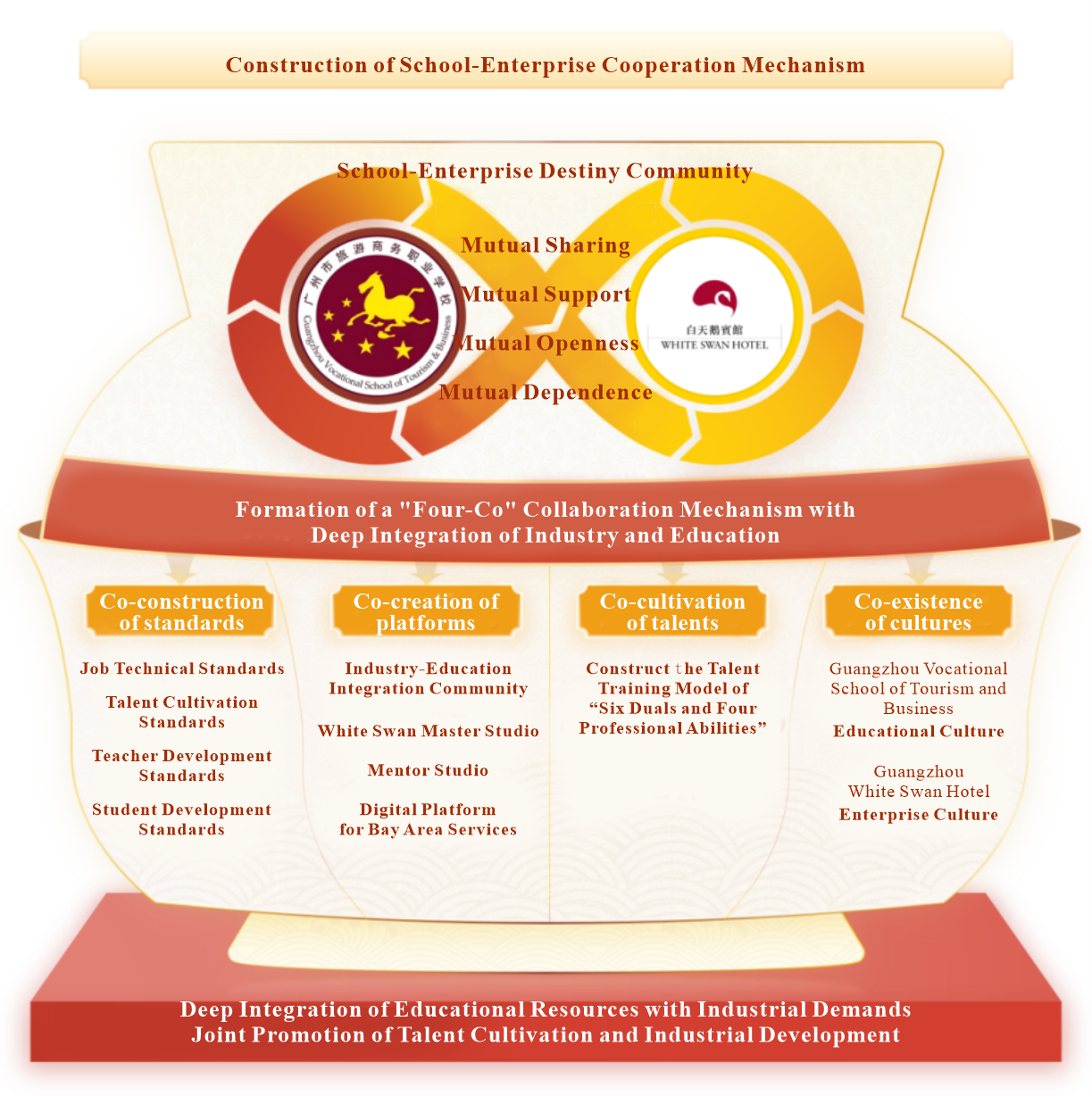
From the perspective of symbiotic unit attributes, schools and enterprises—as the core symbiotic units of the dual-mentor system—possess inherent complementarity in resource endowments and functional positioning: schools offer systematic knowledge transmission systems and specialized faculty, while enterprises provide authentic workplace scenarios and cutting-edge industry demands. The core value of the "Four-Co" Collaboration Mechanism lies in activating this complementarity through institutional design, propelling symbiotic units from “resource isolation” toward “deep mutual embedding.”
Specifically, the co-construction of standards clarifies the common objectives and value orientations of the symbiotic units, integrating corporate job requirements and school educational goals into a unified evaluation system, thereby resolving the misalignment of objectives between schools and enterprises. The co-creation of platforms establishes interfaces for the exchange of materials, energy, and information among symbiotic units. Through vehicles such as industry-education integration communities and master studio, it provides stable interactive channels for implementing the dual-mentor system. The co-cultivation of talents represents a direct manifestation of the functional complementarity among symbiotic units. Through the " Six Duals and Four Professional Abilities" talent cultivation model, it achieves a synergistic enhancement by combining the theoretical grounding provided by school mentors with the on-the-job guidance offered by enterprise mentors. The co-existence of cultures provides a spiritual bond for the long-term and stable cooperation among symbiotic units. By integrating the educational culture of Guangzhou Vocational School of Tourism and Business with the corporate culture of the White Swan Hotel, it fosters a symbiotic atmosphere that combines both educational and industrial characteristics, thereby enhancing the cohesion and sense of belonging among the symbiotic units.
The construction of the "Four-Co" Collaboration Mechanism for school-enterprise cooperation is essentially the deepening and expansion of the inter-embedding logic of symbiotic units in symbiosis theory. It not only achieves functional complementarity and goal alignment among symbiotic units through resource integration and delineation of responsibilities, but also optimizes symbiotic interfaces and environments by establishing institutional platforms and fostering a shared culture. This drives the evolution of university-enterprise collaboration from superficial cooperation to a deeply integrated symbiotic mode.
Symbiotic Mode Collaboration: Building a “Six Duals and Four Professional Abilities” Talent Development Model
In this case, symbiotic mode coordination serves as the core driving force propelling the school-enterprise dual-mentor system from superficial collaboration toward deep integration. Its essence lies in optimizing interaction patterns among symbiotic units to elevate symbiotic relationships from skewed mutual benefit to symmetrical reciprocal symbiosis. The “Six Duals and Four Professional Abilities” talent cultivation model developed by the task force can be explained through the evolutionary dimension of symbiotic modes, revealing its underlying framework and operational logic.
Figure 2
The " Six Duals and Four Professional Abilities" Talent Cultivation Model Constructed in This Case
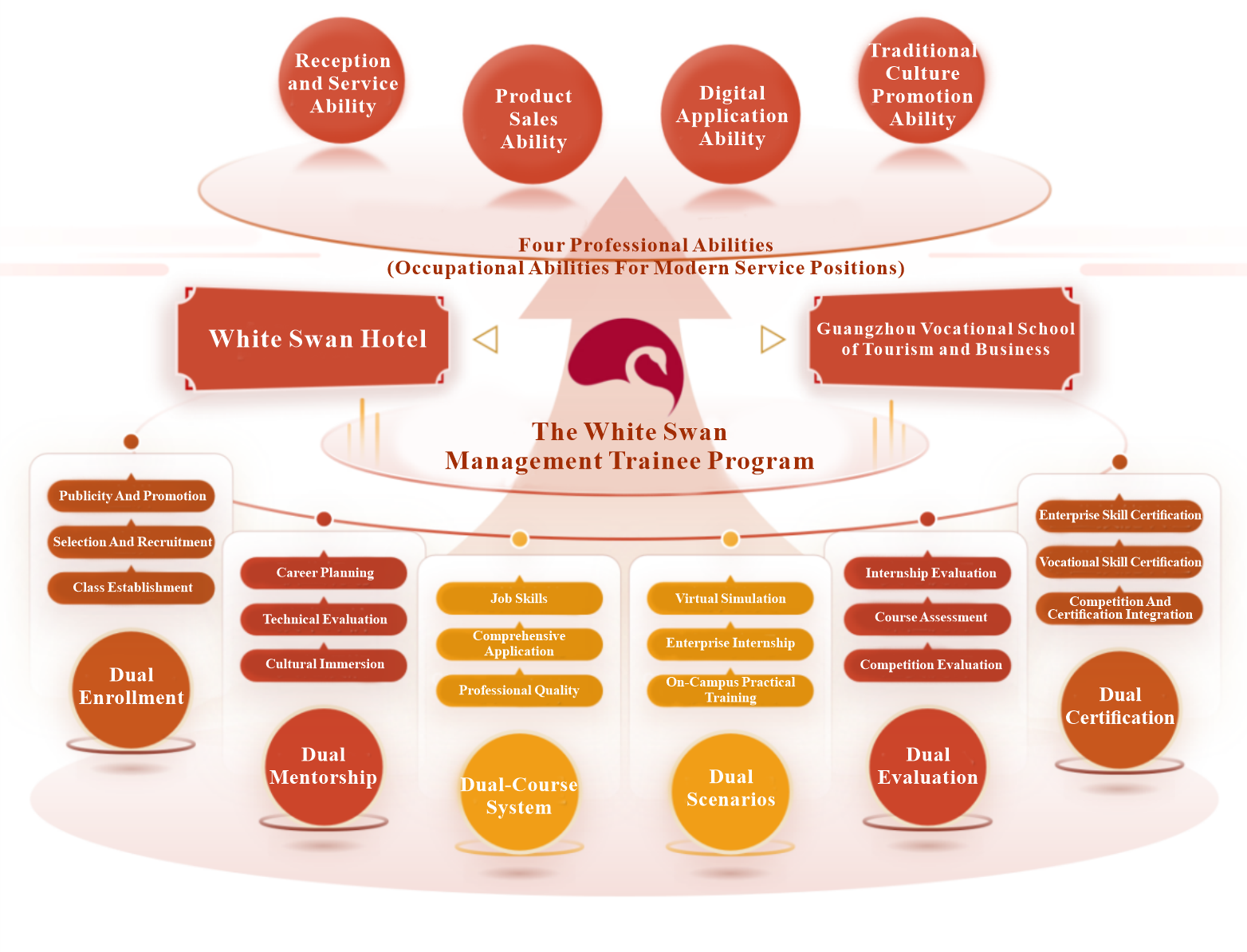
From the perspective of the evolution of the symbiotic mode, the "Six Duals" system (dual enrollment, dual mentorship, dual-course system, dual scenarios, dual evaluation, and dual certification) constitutes the core operational framework for the dual-mentor system between schools and enterprises. Its design logic is closely aligned with the collaborative requirements of the symbiotic mode. Dual enrollment and dual certification, achieved through joint student selection and collaborative skill certification by schools and enterprises, realize bidirectional synergy at both the "entry" and "exit" points. This approach integrates enterprise employment standards into the entire talent cultivation process, thereby resolving misalignment in objectives between schools and enterprises. Dual mentorship and dual-course system, featuring theoretical grounding by on-campus mentors and on-the-job guidance by enterprise mentors, along with the deep integration of theoretical courses from schools and practical courses from enterprises, achieve functional complementarity and resource interpenetration among symbiotic units. Dual scenarios and dual evaluation, through the switching of settings between on-campus practical training and enterprise positions, as well as the diversified evaluations jointly conducted by schools and enterprises, establish an interactive interface among symbiotic units, facilitating precise alignment between the educational process and industry demands. The "Four Professional Abilities" (reception and service ability, product sales ability, digital application ability, and traditional culture promotion ability), serving as the core objectives of talent cultivation, not only represent the value orientation for synergy within the symbiotic model but also embody the concentrated manifestation of symbiotic energy. These four professional abilities align directly with the essential requirements of modern service roles. Through the coordinated implementation of the “Six Duals” system, they seamlessly integrate academic knowledge imparted by the institution with practical skills developed through corporate partnerships. This approach ultimately achieves a systematic enhancement of students' professional abilities.
The “Six Duals and Four Professional Abilities” talent cultivation model is fundamentally based on symbiosis theory, representing a deepening and expansion of the collaborative logic inherent in symbiotic patterns. It not only establishes a stable interactive framework through the “Six Duals” system but also clarifies the direction of collaboration via the “Four Professional Abilities” objectives. This propels both schools and enterprises from unilateral supply to mutual empowerment, and from short-term cooperation to long-term symbiosis. It provides a replicable theoretical framework and practical pathway for resolving real-world challenges in the dual-mentor system for secondary vocational education, such as “unclear responsibilities and authority” and “ineffective collaboration.”
Building Symbiotic Interfaces: Establishing Three Platforms and Three Bases Based on the Guangdong-Hong Kong-Macao Greater Bay Area Modern Service Industry Industry-Education Integration Consortium
Within the analytical framework of symbiosis theory, the symbiotic interface serves as the core medium for the exchange of materials, energy, and information among symbiotic units, and its degree of perfection directly determines the operational efficiency and evolutionary direction of the symbiotic relationship. The White Swan Management Trainee Program draws support from the Guangdong-Hong Kong-Macao Greater Bay Area Modern Service Industry Industry-Education Integration Community to establish a practical system featuring "three platforms and three bases," which can be theoretically interpreted from the perspective of symbiotic interfaces.
Figure 3
The "Three Platforms and Three Bases" Construction Model Based on the Industry-Education Integration Community
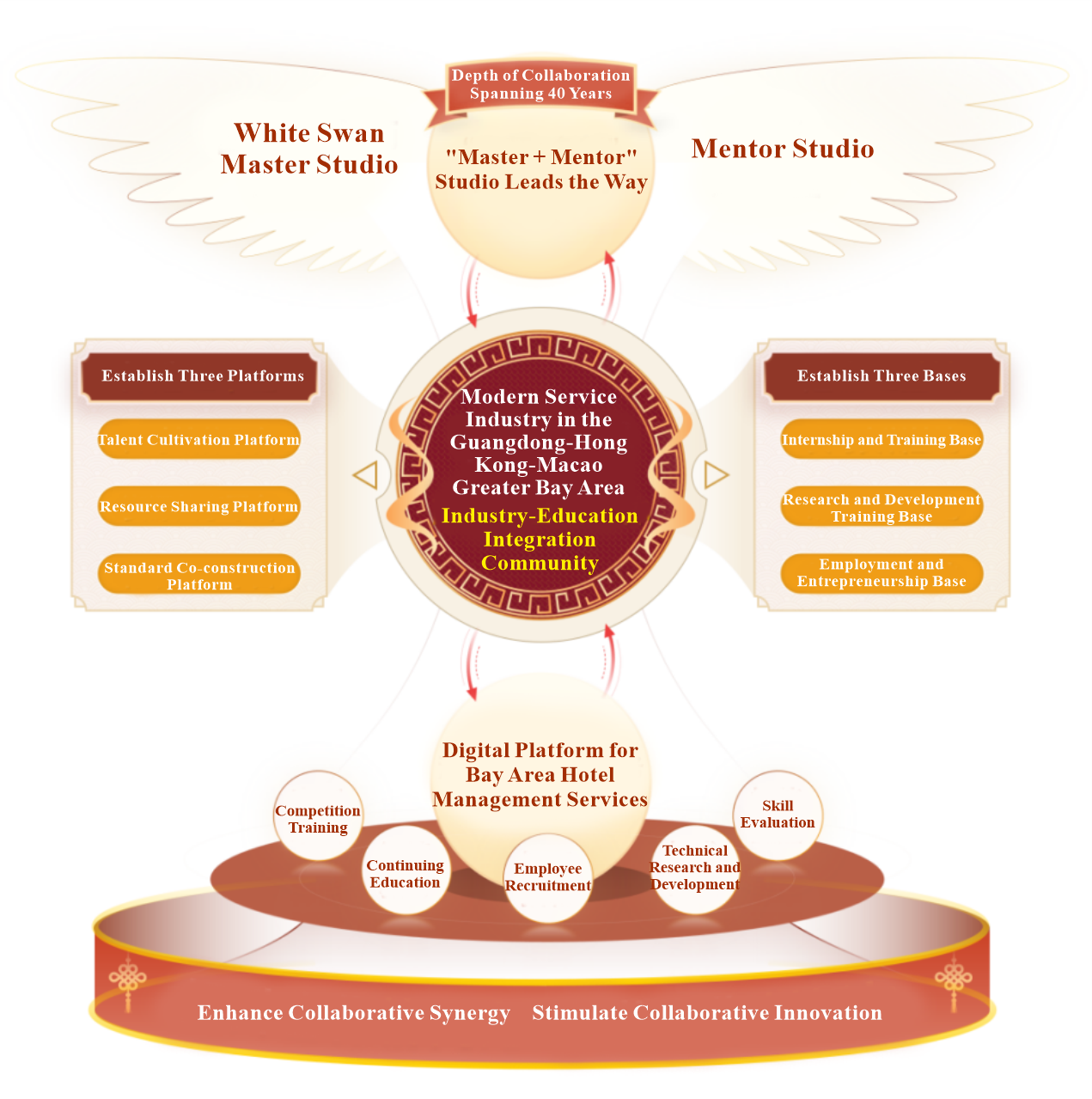
From the perspective of symbiotic interface functionality, the “three platforms” (talent cultivation platform, resource sharing platform, and standard co-construction platform) and the “three bases” (internship and training base, research and development training base, and employment and entrepreneurship base) collectively form the core interactive vehicle for the school-enterprise dual-mentor system. Its design logic aligns closely with the collaborative requirements of the symbiotic interface. The three platforms focus on collaborative empowerment: the talent cultivation platform implements dual-mentor teaching and process management; the resource-sharing platform facilitates two-way exchange of faculty, curricula, and practical training resources between universities and enterprises; and the standard co-construction platform ensures alignment between educational standards and industry standards. Together, they provide stable institutional and technical support for interactions among symbiotic units. The three bases emphasize scenario implementation: the internship and training base provides students with authentic workplace practice scenarios; the research and development training base serves as a platform for dual mentors to conduct teaching research and enhance skills; and the employment and entrepreneurship base bridges student career development with corporate talent reserves. This transforms the symbiotic interface from an abstract institutional design into a tangible practical space.
Meanwhile, the community has further enhanced the connectivity of its symbiotic interfaces through the “White Swan Master Studio,” “Mentor Studio,” and “Digital Platform for Bay Area Hotel Management Services.” White Swan Master Studio and Mentor Studio, serving as the core teaching and research platforms for the dual-mentor system, have driven deep integration between university and industry faculty while fostering pedagogical innovation. The digital platform, through functional modules such as competition training, continuing education, employee recruitment, technology research and development, and skills certification, has achieved a digital upgrade of the symbiotic interface, enhancing the efficiency of resource flow and information exchange.
The establishment of the “Three Platforms and Three Bases” not only overcomes the challenges of physical separation and information barriers between universities and enterprises through the integration of physical spaces and digital platforms, but also drives the evolution of symbiotic interfaces from one-way channels to two-way hubs via institutional platform design. This provides a stable support system for the long-term operation of the dual-mentor system. This represents a deepening and expansion of the logic underlying the establishment of symbiotic interfaces, effectively addressing the practical challenges of “resource fragmentation” and “collaborative inefficiency” within the dual-mentor system of vocational schools and enterprises.
Outcomes of Talent Development in the White Swan Management Trainee Program Under the Dual-Mentor System
Through years of implementation, the school-enterprise dual-mentor system in the White Swan Management Trainee Program has yielded remarkable educational outcomes and industrial value. It has achieved a win-win situation for students, institutions, enterprises, and industries, validating the effectiveness and feasibility of the dual-mentor system's collaborative mechanism from a symbiosis theory perspective.
Notable Quality Rise in Talent Cultivation and Prominent Student Career Potential. The implementation of the dual-mentor system has achieved a deep integration of theoretical and practical instruction, significantly enhancing students' comprehensive professional competence and job readiness. Meanwhile, the career loyalty and job retention rates of specialized program students have significantly improved. Through “high-match employment and high-quality retention,” graduates of the White Swan Management Trainee Program have become high-quality reserve talent for the hospitality industry. At the 2024 National Star-Rated Hotel Service Skills Competition, the White Swan Hotel honored 11 award-winning young employees, nine of whom were graduates of the Guangzhou Tourism and Hospitality College, primarily from the White Swan Management Trainee Program. Over the past three years, students from the White Swan Management Trainee Program have twice won gold medals at the World Skills Competition and multiple first prizes at the Guangdong Provincial Vocational College Skills Competition.
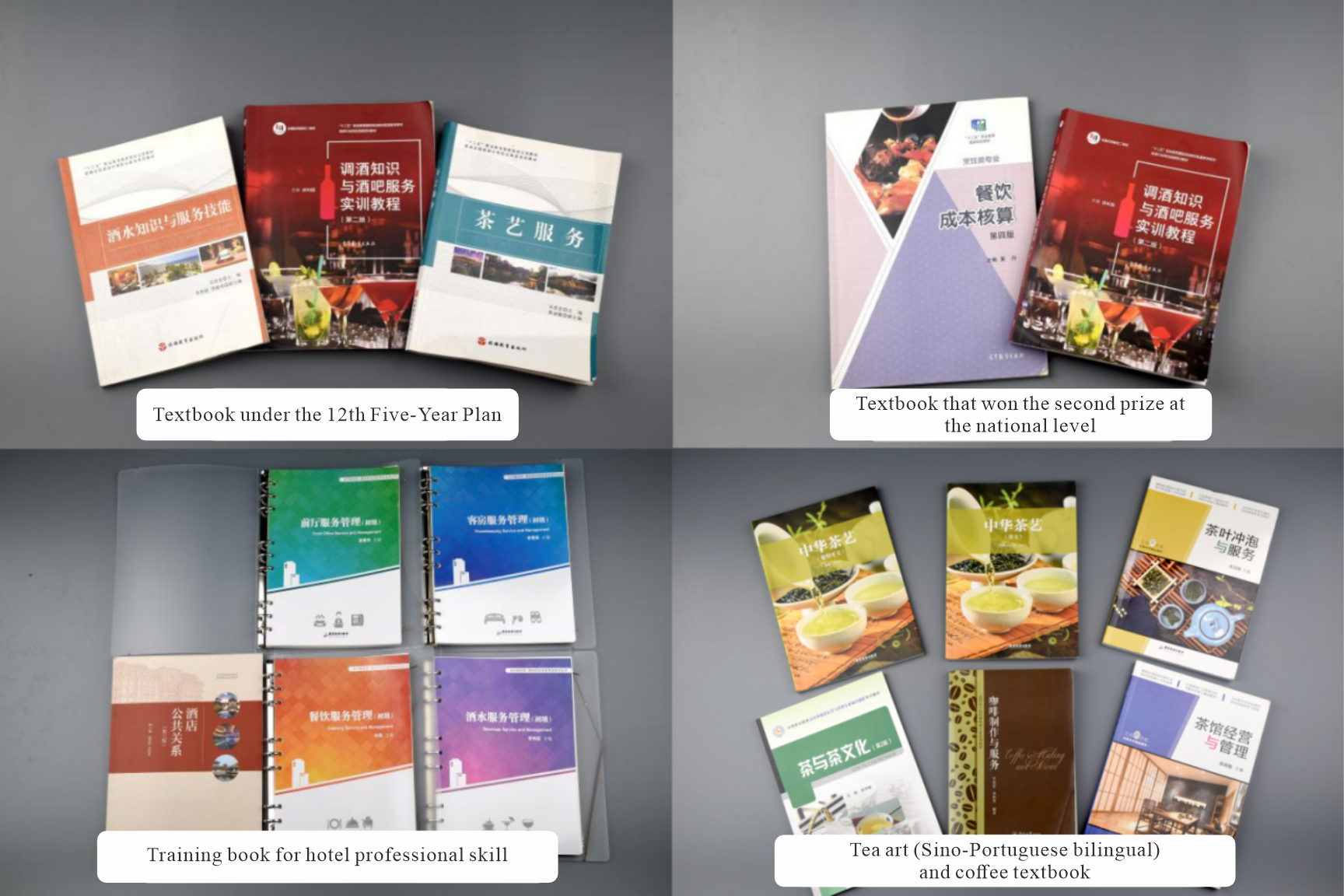
Enhanced School Operational Strength and Deepened Industry-Education Integration. The implementation of the dual-mentor system between schools and enterprises has driven innovation in the school's educational model and talent cultivation approach, continuously enhancing its institutional strength and industry influence. Two textbooks jointly developed by the White Swan Management Trainee Program and the White Swan Hotel's industry-academia mentor team received a national second prize. The program has secured 25 patents, co-authored eight volumes in a hotel vocational skills training series, and served over 180 catering enterprises, establishing itself as the authoritative training material for China's hospitality industry. Additionally, the school spearheaded the establishment of the Guangdong-Hong Kong-Macao Greater Bay Area Vocational Education Alliance and the Bay Area Modern Service Industry Industry-Education Integration Consortium. It became the sole national teacher training base for secondary vocational education in the province, with dual mentor teams from schools and enterprises serving as the main force. Through online and offline training, it has provided instruction to 23 provinces and municipalities nationwide, training over 9,000 teachers.
Figure 4
Various Teaching Materials Developed by The School-Enterprise Dual-Mentor Team
Effectively Meeting Enterprise Talent Demands and Sustaining Industry Competitiveness Enhancement. The dual-mentor system between schools and enterprises has supplied companies with a large number of high-quality talents who demonstrate strong cultural alignment, solid skills, and high professional loyalty, effectively alleviating the structural talent shortage faced by enterprises. Over the past four decades, the school has provided the White Swan Hotel with over 100,000 highly skilled technical professionals. Nearly 60% of the hotel's employees are graduates of Guangzhou Vocational School of Tourism and Business, with 33 of them advancing to senior management positions such as General Manager and Quality Control Director. Graduates of the White Swan Management Trainee Program quickly adapt to corporate job requirements, enhancing service quality and operational efficiency while developing into core personnel for frontline service operations. The collaborative efforts between the university and the enterprise in curriculum development and skills training have significantly advanced the company's talent development and technological innovation, thereby enhancing the core competitiveness of the White Swan Hotel.
Experience Summary: Key Elements of the Collaboration Between Dual Mentors from Schools and Enterprises
Adhere to the Deep Integration of Dual Entities and Establish a Symbiotic Cooperative Ecosystem Based on Shared Interests
In this case, building upon the forty-year foundation of deep industry-academia collaboration between Guangzhou Vocational School of Tourism and Business and the White Swan Hotel, the dedicated task force consistently treats the enterprise as an equal partner in education. Through a "Four-Co" Collaboration Mechanism, it achieves joint standard-setting, platform co-creation, talent co-development, and cultural symbiosis, integrating corporate staffing needs throughout the entire talent cultivation process. This approach precisely aligns with the strategic positioning of “deepening industry-education integration and school-enterprise collaboration” outlined in the Vocational Education Law. It overcomes the traditional dilemma of enthusiastic schools and reluctant enterprises by establishing a shared-interest community between institutions and businesses. This shift transforms enterprises from passive participants into active co-builders, laying a solid foundation for the sustainable operation of the dual-mentor system between schools and enterprises.
Strengthen the Coordination of Dual Mentors' Responsibilities and Authority to Create a Closed-Loop Educational System Integrating Training and Development
The White Swan Management Trainee Program in this case employs a “Six Duals and Four Professional Abilities” talent development model. Under this framework, campus mentors focus on building theoretical foundations and cultivating core competencies, while corporate mentors concentrate on on-the-job training and industry guidance. Throughout the talent development process, both campus and corporate mentors collaborate seamlessly, complementing each other's roles and responsibilities. This design aligns with the national requirement to “implement a dual-mentor system integrating education and training,” embedding the dual-mentor approach throughout the entire talent development process—from recruitment and instruction to practical training and assessment. It achieves dual-scenario education combining classroom learning with on-the-job training, effectively resolving the practical challenges of unclear responsibilities and weak coordination among mentors. This enhances the alignment between talent cultivation and industry demands.
Establish a Diverse and Symbiotic Interface to Improve the Support System for Long-Term Safeguards
Leveraging the Guangdong-Hong Kong-Macao Greater Bay Area Modern Service Industry Education-Industry Integration Consortium, the task force has established “three platforms and three bases.” Through vehicles such as master workshops and digital platforms, it has built a core interface for the flow of resources and information exchange between schools and enterprises. By integrating physical spaces with digital platforms, the White Swan Management Trainee Program has effectively overcome the disconnect between school and enterprise resources. It provides stable institutional, resource, and technical support for implementing the dual-mentor system, thereby advancing vocational education collaboration from formality to substance.
Conclusions and Future Outlook
Building upon a systematic and in-depth analysis of the dual-mentor system implemented by Guangzhou Vocational School of Tourism and Business's White Swan Management Trainee Program, this case study employs symbiosis theory as its analytical framework. By innovatively establishing a three-dimensional collaborative mechanism—comprising “symbiosis unit interbedding, symbiosis model coordination, and symbiosis interface support”—it demonstrates how vocational institutions can effectively overcome practical challenges within the dual-mentor system, such as “enthusiastic schools but lukewarm enterprises,” “unclear responsibilities,” and “fragmented resources.” This approach achieves substantial breakthroughs in fostering a collaborative school-enterprise education ecosystem and enhancing educational effectiveness. The White Swan Management Trainee Program in this case study has significantly enhanced students' job readiness, career identity, and employment stability. It has strengthened the school's industry-education integration capabilities and institutional capacity while supplying partner enterprises with highly skilled professionals who demonstrate strong cultural alignment and high growth potential. Ultimately, this initiative has fostered a win-win ecosystem where students thrive, the school elevates its standards, enterprises gain benefits, and the industry advances. The successful implementation of the dual-mentor system in this case study not only validates the explanatory power and applicability of symbiosis theory in vocational education's industry-academia collaborative training but also provides a replicable and scalable solution to address the common challenges and pain points of such systems becoming merely formalistic and lacking effective collaboration.
The innovation of this case study manifests in three key aspects. First, theoretical perspective innovation: this case pioneers the systematic application of symbiosis theory to research on the dual-mentor system in vocational education, establishing an analytical framework comprising “symbiosis units, symbiosis modes, symbiosis interfaces, and symbiosis environments.” This enriches the theoretical foundation of the dual-mentor system in vocational education. Second, in terms of practical innovation, this case study pioneers the "Four-Co" Collaboration Mechanism and the “Six Duals and Four Professional Abilities” talent development model. It provides a clear operational guide for vocational institutions to implement the dual-mentor system, demonstrating strong potential for replication and practical application. Third, the case study stands out for its exemplary nature. Leveraging the Guangzhou Vocational School of Tourism and Business and the White Swan Hotel—a high-quality university-enterprise partnership with four decades of collaborative history—the dual-mentor system demonstrates both authority and persuasiveness. This significantly enhances the research findings' exemplary value and potential for broader impact.
This case study also has certain limitations. First, the selected case focuses on a single high-quality school-enterprise cooperation project. Its advantageous resource conditions and deep cooperative foundation may limit the applicability of this model in areas with weaker foundations or in small and medium-sized enterprises. Second, while the case data collection strives for diversity, micro-observations and long-term tracking of the dual-mentor collaboration process could be further deepened. Additionally, there is a lack of long-term tracking data on students' career development trajectories. Finally, the case study indicates that the quantitative evaluation system for the educational effectiveness of the dual-mentor system remains incomplete, particularly regarding the precise measurement of symbiotic energy and collaborative efficacy, which requires further exploration.
Based on this, future research can be further deepened in the following three areas. First, comparative studies across regions and across project types (such as different majors and different enterprise sizes) can be conducted to test the adaptability of the model and identify directions for optimization. Second, longitudinal tracking methods can be employed to assess the sustained impact and effectiveness of the dual-mentor system on students' medium-to-long-term career development. Finally, a multidimensional quantitative indicator system can be developed to measure the effectiveness of the dual-mentor system in school-enterprise collaborations. This will enhance the scientific rigor and scalability of evaluations. Additionally, the feasibility of leveraging digital platforms—such as virtual simulation training systems and dual-mentor collaborative management platforms—to improve the operational efficiency and coordination of the dual-mentor system should be explored.
